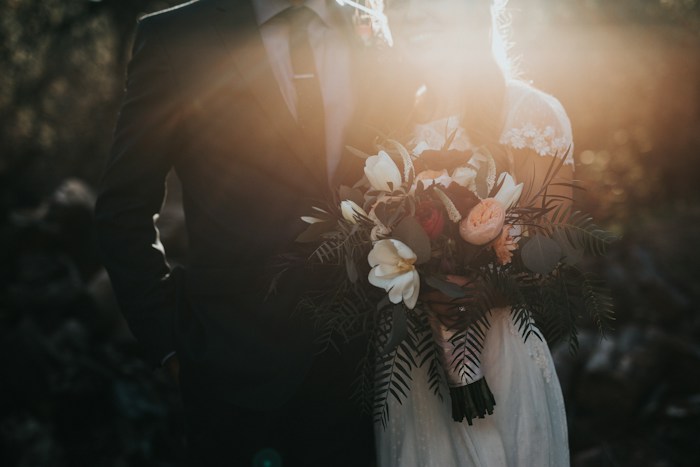
Golden hour is not magic because it is orange. It is magic because it softens decisions. Skin looks gentler, movement looks more lyrical, and even nervous couples begin to relax into the frame.
That softness is exactly why portrait sessions succeed or fail in the last hour of light. The window is short, the pressure is high, and every minute matters. But when the plan is right, the images feel effortless.
These are the principles we return to whenever we want portraits to feel cinematic instead of staged.
Timing the Light
Many couples hear “golden hour†and assume there is a generous hour of perfect light. In practice, the truly flattering section is often closer to twenty or thirty-five minutes depending on location, season, and horizon.
We work backwards from sunset, not forwards from the ceremony. That means transport, family photos, touch-ups, and transition time all need to be accounted for before the portrait session begins.
Place the Couple Well
Light only helps if the couple is standing where the light can wrap correctly. We look for open shade edges, clean horizon lines, and backgrounds that support the mood without becoming noisy.
- Turn them slightly away from the sun. It protects the eyes and shapes the cheekbones.
- Give them room to walk. Movement looks better than static posing.
- Keep the background simple. Clarity makes the emotion more legible.
- Watch for color reflection. Grass, walls, and sand all tint skin differently.
Direct Movement, Not Poses
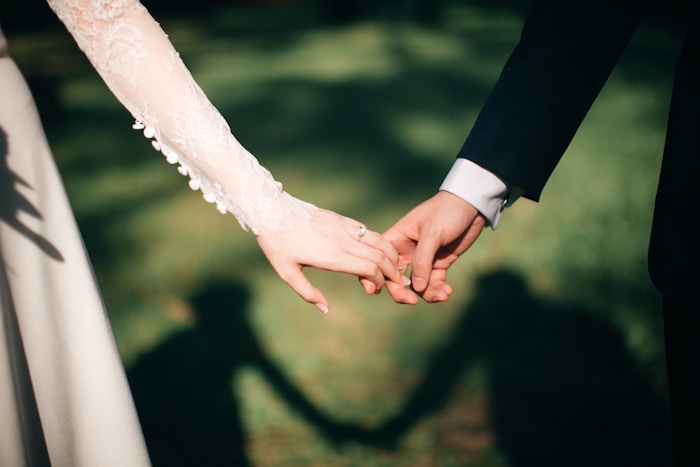
Our best portrait prompts are simple: walk slowly, touch foreheads, look past each other, whisper something private, turn back toward the light. These actions create small authentic reactions that still photograph beautifully.
When couples are asked to hold stiff poses too long, the body locks up and the energy drops. Short, repeatable prompts keep them engaged and give us usable variations quickly.
Use Foreground and Depth
Cinematic images rarely feel flat. A branch, curtain edge, flare, or architectural frame in the foreground adds context and softness. It gives the viewer the sense that they are peeking into a real moment instead of looking at a posed tableau.
Depth also helps the couple stand out without needing exaggerated editing later. The visual separation should happen first in the scene, then in post.
"We were worried about portraits feeling awkward, but the prompts felt natural. By the end, it honestly just felt like we were taking a walk together."
— Lulu & Hassan, married March 2026
Style Choices Matter
Fabric, fit, and movement all change how portraits behave in light. Matte textures usually photograph better than shiny ones at sunset. Structured tailoring gives shape. Veils, sleeves, and loose fabrics create motion that the frame can use.
We also think about contrast. If the environment is sandy and pale, richer wardrobe tones may give the portrait more weight. If the venue is dark and dramatic, lighter fabrics help keep the couple luminous.
When the Sky Changes
Cloud cover is not a problem. It simply changes the assignment. Instead of chasing flare, we look for texture, intimacy, and mood. Overcast portraits can feel cinematic in a quieter, more editorial way.
- Use open sky as a giant softbox.
- Bring the couple closer together.
- Lean into architecture or landscape shape.
- Avoid trying to force a sunny look in post.
Finish With Restraint
Good editing preserves the atmosphere that was already there. We refine skin, shape contrast, and keep warmth present without pushing the tones until they feel synthetic.
If the light felt tender in real life, the final gallery should still feel tender. That is the whole point. Technique should support the memory, not overpower it.
The best portraits do not announce the direction behind them. They simply feel true.
Want Portraits That Feel Effortless On Camera?
We build portrait sessions around movement, timing, and atmosphere so couples never feel over-directed or pulled out of the day.